





The Silverado 2500 vs 1500 question comes up the moment a truck shopper starts thinking seriously about towing or hauling. It carries real stakes either direction. Choose a truck with too little structural capacity and you push equipment past safe rated limits. Choose a platform with more capacity than your work ever demands and you absorb the fuel, ride, and cost trade-offs of a heavier truck you never fully load. The goal here is to lay out what separates these two trucks at a structural and mechanical level, what those differences mean for specific work scenarios, and how to reach a clear, grounded answer.
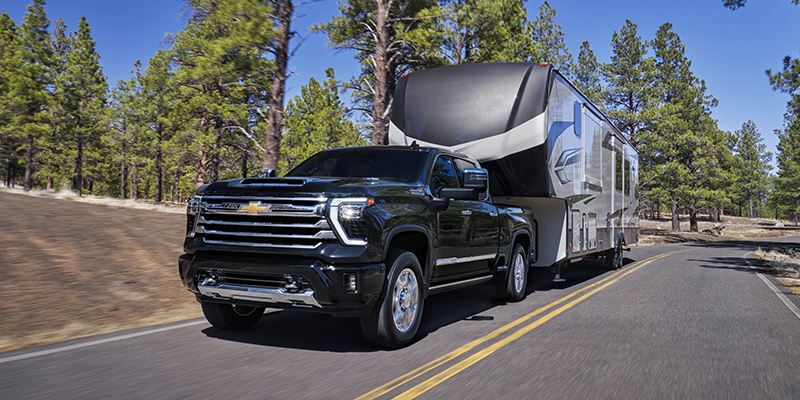
What the HD Designation Means at the Structural Level
HD stands for heavy duty, but that label covers a specific set of engineering choices that go well beyond a higher tow rating on the window sticker. The Silverado 2500 HD sits on a different foundation than the 1500, and those differences run through the frame construction, rear axle design, suspension geometry, and braking architecture.
The 2500 HD uses a fully boxed high-strength steel ladder frame with heavier-gauge rails than the 1500 frame. Fully boxed construction closes all four sides of each frame rail, which increases resistance to torsional flex. When a loaded trailer applies rearward and downward force on the hitch receiver, the frame absorbs and distributes that force along its full length. A lighter frame deflects under that load. Deflection introduces stress fatigue into the metal and reduces how predictably the truck tracks a trailer through a turn or on a grade.
The rear axle construction shifts between these two trucks as well. The Silverado 1500 uses an independent rear suspension on select configurations, which smooths out the ride on unloaded roads and reduces road noise at highway speeds. The 2500 HD runs a solid rear axle with leaf springs. That setup produces a firmer feel on empty roads but holds the axle in a fixed, stable position under vertical load. Leaf spring geometry stays consistent under heavy vertical weight in ways that coil and air setups cannot match across the full rated load range, which is why that configuration remains standard across HD-class work trucks.
The braking architecture scales up to match. The 2500 HD ships with larger caliper and rotor packages and includes a factory-integrated trailer brake controller. Stopping a 20,000-pound combined vehicle and trailer load requires a far greater braking force than stopping an empty pickup. The 2500 HD’s system is rated and calibrated for that demand range. The 1500 system is not.
What Does Towing Capacity Really Mean for Your Decision?
Towing capacity ratings are maximums, not operational targets. That distinction carries more weight in the buying decision than most shoppers realize before they commit.
The Silverado 1500, when properly set up, reaches a maximum conventional tow rating of approximately 13,300 pounds. The 2500 HD with the Duramax 6.6L turbo-diesel reaches 22,500 pounds. Those numbers tell part of the story. What they leave out is operating headroom, and headroom is where the gap between these two platforms lives in real terms.
A truck pulling near its rated maximum is working at the outer edge of its calibrated load range. The engine works harder to hold speed on grades. The transmission cycles more frequently under sustained load. The brakes absorb more heat per stop. The suspension runs compressed closer to its designed limit. None of those factors is unsafe in isolation, but the cumulative load on drivetrain cooling, brake components, and hitch hardware accelerates wear on trucks that run near their ceiling on a frequent basis.
A Silverado 2500 HD pulling 13,000 pounds with the diesel is running at roughly 57 percent of its rated maximum. The engine, transmission, brakes, and suspension are well within their calibrated range. The truck holds speed on grades without strain, manages stopping distances with headroom left, and places far less thermal stress on the transmission cooler and rear brakes. If your trailer loads sit between 10,000 and 14,000 pounds with any frequency, that gap in operating margin is worth evaluating carefully, even if both trucks carry ratings that technically cover those numbers.
Shoppers who pull fifth-wheel RVs, livestock trailers, or loaded flatbeds should pay close attention to tongue weight ratings alongside gross trailer weight. Tongue weight is the downward force a trailer’s hitch point applies to the truck’s receiver. The 2500 HD’s receiver, frame, and rear suspension are rated for a far higher tongue weight ceiling than the 1500. Exceeding that ceiling creates trailer instability and accelerates wear on the hitch receiver.
What a Heavy-Duty Truck Costs You Day to Day
The Silverado 2500 HD is a fully usable daily truck, but it asks for trade-offs worth understanding before the purchase is made.
The solid rear axle and leaf spring suspension that give the 2500 HD its stability under load produce a noticeably firmer ride on unloaded roads. With the bed empty and no trailer attached, the rear end has less compliance over expansion joints, rough pavement, and gravel. Drivers who spend most of their time on Colorado’s rural county roads or eastern plains highways without cargo will feel that stiffness on a daily basis. It is not harsh, but it is distinct from the coil-suspended ride of the 1500.
Fuel consumption is a real line item. The 2500 HD does not receive an EPA fuel economy rating because HD-class trucks fall under a separate federal testing standard, but owner data from mixed driving puts gas-engine 2500 HD models in the 12 to 15 mpg range. The 1500 with a comparable V8 returns 16 to 20 mpg in similar drive cycles. For buyers covering long miles through eastern Colorado and western Kansas, that spread adds up to a measurable annual fuel cost difference.
Maneuverability deserves an honest look as well. The 2500 HD is longer, taller, and heavier than the 1500 in equivalent cab and bed configurations. In tight loading areas, elevator lots, or narrow farm access roads, that added footprint requires more deliberate awareness. If your daily route involves frequent maneuvering in confined spaces without a trailer, the 1500’s smaller profile gives you a real operational edge.
The Work Scenarios Where the 2500 HD Is the Right Tool
There is no universal answer to the half-ton versus three-quarter ton question. Certain work scenarios point clearly toward the 2500 HD, and the reason is not that the 1500 falls short on paper. It is that the 2500 HD’s structural architecture fits those scenarios in ways a lighter platform cannot replicate. Three categories cover the majority of buyers who need to step up to HD.
- Gooseneck and fifth-wheel towing: Both hitch types mount in the truck bed and transfer load directly to the frame and rear axle. That mounting geometry requires the structural rating of an HD chassis. The 2500 HD is the correct platform for that connection, and the 1500 is not rated for it.
- Consistent loads above 10,000 pounds: Loaded livestock trailers, heavy flatbeds carrying farm equipment, and large enclosed cargo haulers in that range belong on an HD chassis. The operating headroom gap covered in the previous section is the reason, not the maximum number on the sticker.
- High payload work in the bed: The 2500 HD carries between 3,375 and 3,689 pounds of payload in gas-engine configurations, roughly 60 percent more than a well-equipped 1500. Contractors loading concrete block, lumber, or equipment components need that rated capacity to stay within safe limits.
Two additional scenarios make a strong case for the 2500 HD. Drivers who make sustained trailer hauls on highway grades put continuous demand on drivetrain cooling, and the 2500 HD’s engine and transmission cooling architecture is calibrated for that sustained output in ways the 1500 is not. Buyers who need the Duramax 6.6L turbo-diesel for long-haul torque will find the 910 lb-ft and 470 horsepower it produces deliver a qualitatively different pulling character than any gas engine in either truck class.
How to Evaluate Which Truck Fits Your Work
The right starting point is your most demanding consistent use case. What comes up on a regular schedule sets your load baseline, and that baseline points you toward the right platform.
If your heaviest consistent load is a recreational boat, a small travel trailer, or a utility trailer under 8,000 pounds, the Silverado 1500 handles that work with rated headroom to spare. Add the available 3.0L Duramax diesel and you get towing efficiency without the HD trade-offs on fuel consumption and ride firmness. The 1500 is also the stronger fit if you spend most hours driving unloaded or if a smoother daily ride is a priority.
If your work includes hauls above 10,000 pounds on a frequent basis, fifth-wheel towing, or heavy payload loads in the bed, the Silverado 2500 HD is the correct starting point. The added purchase cost, with the 2026 model starting at $48,195, reflects the investment in frame construction, braking capacity, and drivetrain cooling architecture that protect both the truck and whatever it pulls.
Buyers caught between these two platforms are most frequently those with occasional heavy needs. If you pull heavy equipment four times a year but otherwise drive empty, a properly equipped 1500 may cover those hauls adequately. However, if those hauls run above 12,000 pounds, the margin narrows. In those situations, the 2500 HD provides a structural buffer the 1500 cannot.
At Vince’s GM Center in Burlington, Colorado, the team works with truck buyers across eastern Colorado and western Kansas who face exactly this decision every season. Whether your needs point toward the versatile 1500 or the work-rated 2500 HD, the right conversation starts with what you haul, and the team here is ready to work through that with you
Connect with us

