





Blog / Burlington Chevrolet Service

What Drivers Notice When a Service Department Makes Things Easier, Not More Stressful

Most drivers searching for a GM service center near me or auto service near me are not just trying to fix a problem. They are trying to avoid a stressful experience. That stress usually does not come from the repair itself. It comes from uncertainty, lack of communication, unclear timelines, and not knowing what to expect next.

A well-run service department changes that experience entirely. Instead of reacting to problems, it creates a system where drivers understand what is happening, why it is happening, and what comes next. That shift is what builds long-term trust and confidence in vehicle ownership.

Why Service Feels Stressful and What Drivers Are Actually Reacting To

Many drivers ask what they should expect from a car service appointment. A service appointment is a structured process that includes vehicle check-in, diagnostics, technician evaluation, repair or maintenance, and final verification before returning the vehicle.

Stress happens when that process feels unclear or inconsistent.

Drivers are usually reacting to

• Not knowing how long the service will take
• Not understanding what is being done to their vehicle
• Unexpected pricing changes
• Lack of updates during the process

These are not mechanical problems. They are process problems.

When a service department is structured properly, each step is predictable. The driver knows when the vehicle is being inspected, when decisions are made, and when the vehicle will be ready. That predictability reduces stress more than any single repair ever could.

How Communication Systems Reduce Uncertainty During Service

Many drivers wonder how they can tell if a service center is reliable. A reliable service center is one that clearly communicates what is happening with your vehicle at every stage of the process.

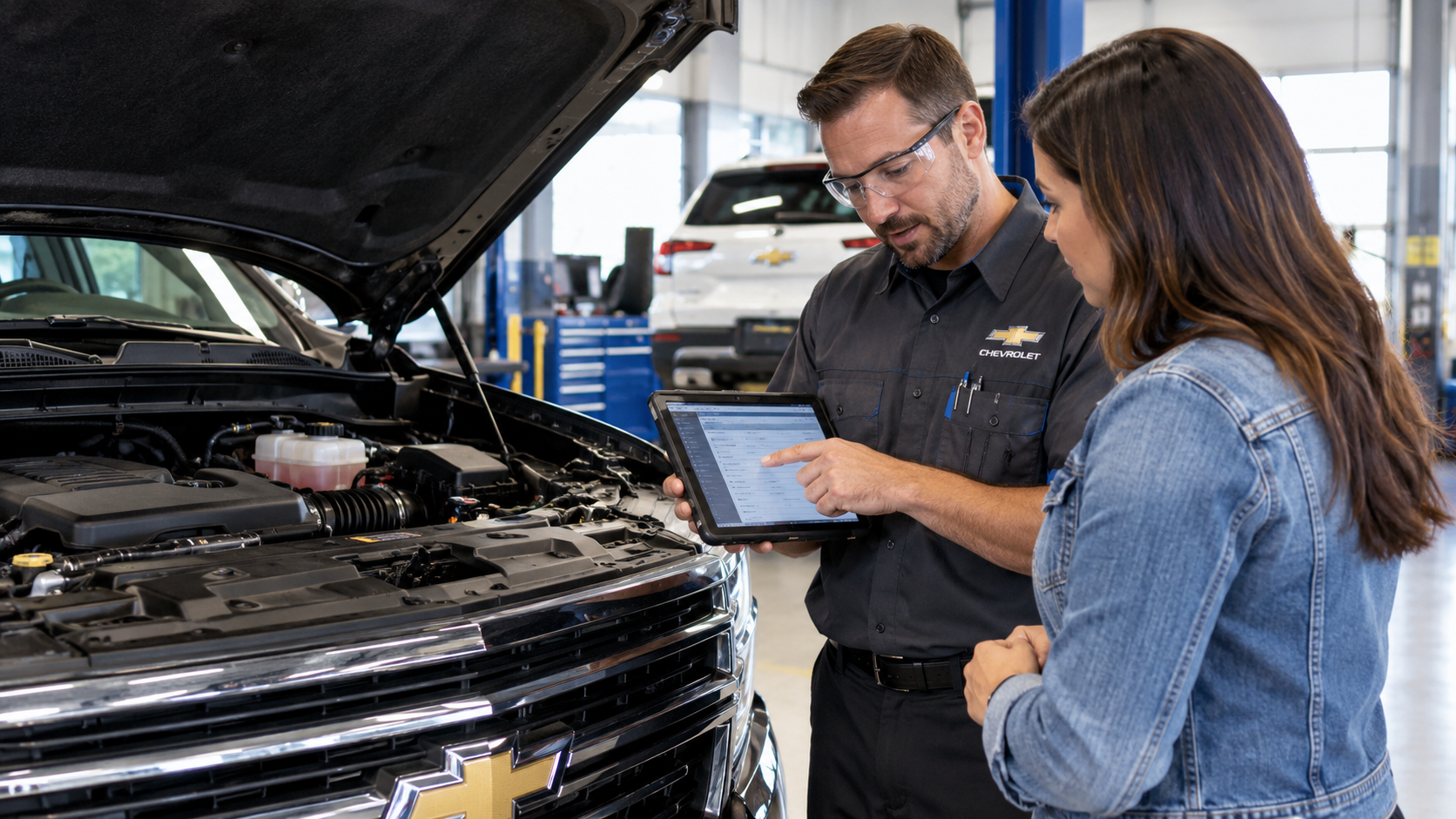
In a GM service environment, communication is typically structured between the service advisor, technician, and driver. The technician performs diagnostics and documents findings. The service advisor translates that information into clear explanations and next steps for the driver.

Effective communication systems include

• Clear explanation of diagnostic results before any work begins
• Approval steps before additional repairs are performed
• Status updates during longer service visits
• Transparent breakdown of pricing and labor

When this system is working correctly, drivers are not left guessing. They understand what their GM vehicle needs and why those recommendations are being made.

This is especially important with modern vehicles, where diagnostics involve electronic systems, sensors, and onboard computers. Without clear communication, these systems can feel complicated. With proper explanation, they become understandable and manageable.

How Workflow and Scheduling Impact Service Time

One of the most common questions drivers have is how long service should take. Service time is not random. It is determined by how the service department manages workflow.

A service department operates on a structured schedule that includes appointment spacing, technician availability, and diagnostic prioritization. When too many vehicles are scheduled at once, delays happen. When scheduling is balanced correctly, work flows efficiently.

Several factors influence service timing

• The type of service being performed, such as routine maintenance versus diagnostics
• Technician specialization and availability
• Parts availability for repairs
• The condition of the vehicle when it arrives

For example, a GM oil change and inspection follows a standardized process and can be completed quickly when scheduled properly. A diagnostic visit takes longer because the technician must identify the root cause before repairs begin.

When drivers understand this difference, wait times feel more predictable instead of frustrating.

Why Preventative Maintenance Changes the Ownership Experience

Many drivers approach service as something they deal with when something goes wrong. Preventative maintenance changes that approach completely.

Preventative maintenance is a planned service schedule designed to keep vehicle systems operating within their intended range. This includes oil changes, brake inspections, fluid checks, and system monitoring.

In GM vehicles, maintenance schedules are built around mileage intervals and system performance data. Following these schedules allows technicians to identify wear before it becomes a failure.

This approach reduces stress in several ways

• Fewer unexpected breakdowns
• More predictable service visits
• Lower long-term repair costs
• Better overall vehicle performance

Instead of reacting to problems, drivers stay ahead of them. That creates a more stable and confident ownership experience over time.

What a Well-Run Service Department Actually Looks Like

Many drivers ask how to choose a reliable auto repair shop. A well-run service department is not defined by a single factor. It is defined by how consistently the entire system works.

Key indicators of a strong service experience include

• Structured appointment scheduling that prevents overcrowding
• Clear communication between technician, advisor, and driver
• Transparent pricing before work begins
• Consistent updates throughout the service process
• Efficient workflow that reduces unnecessary delays

When these elements are in place, service becomes predictable. Drivers know what to expect, how long things will take, and how decisions are made.

For GM vehicle owners, this also means working with technicians who understand GM-specific systems, diagnostics, and service intervals. That familiarity improves accuracy and efficiency during every visit.

How Service Experience Impacts Long-Term Ownership

The way a service department operates affects more than a single visit. It shapes how drivers feel about maintaining their vehicle over time.

When service is easy to schedule, clearly communicated, and efficiently completed, drivers are more likely to stay consistent with maintenance. That consistency leads to better vehicle reliability, fewer major repairs, and a smoother ownership experience overall.

When service feels disorganized or unclear, drivers tend to delay maintenance. That delay often leads to larger issues, higher costs, and more stress in the future.

This is why the service experience matters just as much as the repair itself. It determines whether maintaining a vehicle feels manageable or overwhelming.

What Drivers Should Pay Attention To During Service

Instead of focusing only on the repair outcome, it helps to evaluate how the service process works.

Pay attention to

• How clearly the service advisor explains the work being done
• Whether pricing is communicated before repairs begin
• How often updates are provided during the visit
• Whether timelines are realistic and consistent
• How easy it is to schedule and complete future appointments

These factors define the experience. When they are handled well, service becomes something drivers can rely on instead of something they avoid.
Posted in:

Related Posts

Chevrolet and GMC Spring Service Checklist for Colorado Drivers

Spring in Colorado can be hard on a vehicle in ways many drivers do not immediately notice. Winter may be over, but the effects of cold temperatures, road grime, potholes, and changing tire pressure often show up after the season ends. That is why a Chevrolet spring maintenance checklist or GMC spring maintenance checklist should do more than repeat basic service reminders. It should help drivers understand which systems were stressed during winter and why those systems matter for daily driving, safety, and long term wear. For Colorado drivers, spring service is not just about routine upkeep. It is about catching small issues before they affect tire life, visibility, braking confidence, or summer travel reliability. That practical, ownership focused approach fits the clear and benefit led tone expected for Chevrolet and GMC service content. Why Colorado Spring Driving Changes What Chevrolet and GMC Owners Should Check First Many Chevrolet and GMC owners ask what a spring vehicle maintenance checklist should actually include after a Colorado winter. The answer starts with understanding what winter conditions do to the vehicle. Freeze thaw cycles can create potholes that put sudden impact loads into tires, wheels, and suspension components. Road debris and grime build up underneath the vehicle and around key wear items. Temperature swings can also affect tire pressure and battery performance. A vehicle may still feel normal in everyday driving even when alignment angles, tread wear, or filter condition have started to change. That is why a useful Chevrolet spring maintenance checklist or GMC spring maintenance checklist should prioritize the systems most likely to be affected by winter road conditions: • Tires and wheel condition • Suspension and alignment behavior • Oil and fluid condition • Engine and cabin air filters • Wiper blades and brake performance • Multi point inspection results This kind of checklist is more effective than a generic service list because it reflects how Colorado roads and weather influence real ownership. How Chevrolet and GMC Tire Service Helps Catch Winter Road Damage Drivers also want to know why Chevrolet tire rotation service or GMC tire inspection matters so much in spring. The reason is that tires are often the first place winter wear becomes visible. Tire rotation is the process of moving tires from one wheel position to another so tread wear stays more even across the vehicle. Chevrolet recommends regular tire rotation because front and rear tires often wear differently depending on steering load, braking force, and drivetrain layout. When wear becomes uneven, it can affect how the vehicle tracks on the road, how evenly it brakes, and how long the tires last. Spring is also a good time to check for pothole related problems. A hard impact can damage more than the tire itself. It can also affect: • Wheel condition and balance • Alignment angles • Steering response • Suspension components • Tread wear patterns For Colorado drivers, this means a Chevrolet tire rotation service or GMC tire inspection is not just about mileage intervals. It is also a way to catch winter damage before it turns into vibration, uneven wear, or reduced wet weather grip. Why Oil, Filters, and Fluids Matter in a Chevrolet and GMC Spring Maintenance Checklist Another common question is whether Chevrolet oil and filter change service or GMC engine air filter service really needs attention if the vehicle still seems to be running fine. In many cases, yes. Oil protects internal engine components by reducing friction, carrying heat away from moving parts, and helping suspend contaminants until the oil is changed. If oil has broken down or reached its service interval, the engine may still operate normally for a while, but long term protection is reduced. Spring is also an ideal time to check filters. A dirty GMC engine air filter service item can restrict airflow into the engine, which affects combustion consistency and can reduce performance efficiency. A clogged GMC cabin air filter replacement or Chevrolet cabin filter service item can reduce airflow through the HVAC system, which matters once warmer weather arrives and drivers rely more heavily on ventilation and air conditioning. Fluid checks are important for the same reason. Brake fluid, coolant, and washer fluid all support systems that become especially important as spring weather and travel demands increase. How Wiper Blades and Brake Checks Support Safer Spring Driving Owners often ask whether Chevrolet wiper blade replacement or GMC brake inspection is truly necessary if there are no obvious warning signs. The issue is that both systems can decline gradually. Wiper blades are a good example. After a winter of cold exposure and road grime, the rubber edge on a blade may harden, crack, or lose even contact with the windshield. In light rain or road spray, that can lead to streaking and reduced visibility. Drivers often do not notice the problem until the first strong spring storm. Brake inspections matter for a similar reason. Braking performance is not only about whether the vehicle stops. It is also about how smoothly and consistently it responds under normal driving. If pads are worn unevenly or braking surfaces show excess wear, stopping confidence can change slowly enough that drivers adapt to it without realizing the system needs service. For spring driving, these items are worth checking because they directly affect visibility and control. Why a Chevrolet and GMC Multi Point Inspection Is One of the Smartest Spring Service Steps Another common question is whether a GMC multi point inspection or Chevrolet multi point inspection is just a basic review or a useful way to catch winter related wear. A multi point inspection is a structured service check in which technicians review major vehicle systems such as tires, brakes, fluids, and visible wear items to identify developing maintenance needs. That matters because not every issue creates an immediate dashboard warning or obvious symptom. A spring inspection can help flag: • Battery weakness after cold weather strain • Uneven tire wear or impact damage • Brake wear that has not yet become severe • Fluid conditions that need attention • Wiper or filter wear that affects comfort and visibility For Colorado drivers, a Chevrolet and GMC certified service visit that includes a multi point inspection can be one of the most efficient ways to reset the vehicle after winter and prepare it for warmer weather travel. Why a Spring Checklist Matters for Chevrolet and GMC Owners A strong Chevrolet spring maintenance checklist or GMC spring maintenance checklist should do more than remind drivers to get an oil change. It should help owners understand how winter conditions affect tires, filters, visibility, braking, and inspection needs. That is especially important in Colorado, where potholes, temperature swings, and changing road conditions can create wear that is easy to overlook. For drivers preparing for spring commuting and summer travel, the smartest service priorities usually include tire inspection and rotation, oil and filter service, air filter checks, wiper blade review, brake inspection, and a multi point inspection. When those items are handled together, Chevrolet and GMC owners are in a stronger position to protect vehicle performance, comfort, and reliability through the next season.

Chevy Service Appointment Repair Explanations Before Work

Chevy Service Appointment Repair Explanations Before Work

A chevy service appointment should leave you with clear answers before any repair work begins. You should know what technicians checked and what they found. In addition, you should know what they recommend next. Clear explanations make it easier to review the repair plan and ask useful questions. Therefore, each part of the visit should connect to the concern you reported. The goal is a repair decision based on clear information. Start With What the Vehicle Is Doing What should you tell the service team when you arrive? Start with the exact symptom you noticed and when it appears. Additionally, mention warning lights, noises, vibration, odors, or changes in operation. Recent repair work can add useful context during a chevy service appointment. However, vague descriptions can give technicians less direction at the start. A few specific details can give the technician a clearer starting point. Describe whether the issue appears during startup, braking, acceleration, turning, or highway driving. Explain when the issue first appeared and whether it happens during every trip or only at certain times. Mention recent maintenance, repairs, warning lights, unusual sounds, or other changes that happened before the concern appeared. A clear history gives the technician more information to compare with test results. As a result, the diagnostic path can begin with specific clues from your description. The advisor can then explain what needs to be checked first. A Diagnostic Code Is the Starting Point Does a diagnostic code tell the technician which part needs replacement? No. Instead, a code points toward an area that needs further testing. During a chevy service appointment, technicians may review scan data after retrieving a code. Furthermore, they may inspect wiring, connectors, sensors, fluid levels, or related mechanical parts. Each step can narrow the source of the concern. A clear explanation should separate the code from the confirmed finding. Therefore, you should hear what the scan showed and what testing followed. You should also hear what evidence supports the diagnosis. Some concerns do not create a stored code. For this reason, a noise, vibration, leak, or intermittent issue may require direct inspection. Road testing or targeted measurements may also be needed. Verification should come before a firm repair recommendation. However, the cause may still remain uncertain after the first tests. In that situation, the service team should explain what remains to be checked. Clear Findings Should Explain What Was Checked A chevy service appointment may include inspections beyond the concern that brought you in. Therefore, the findings should provide more than a list of checked boxes. You should understand the inspection steps and the technician’s findings. A useful explanation connects each inspection result with clear information you can review. That information should make the finding easier to understand before another service decision is made. A brake inspection should explain items such as pad thickness, rotor condition, and any visible hardware concerns. A battery check should explain the test result and whether the battery currently meets expected operating requirements. A tire inspection should explain tread depth, pressure, visible wear, and any issue that may require attention. The finding itself also needs context. However, a statement such as “needs brakes” leaves several useful questions unanswered. A stronger explanation identifies the measured result and the proposed repair. The same approach works across routine maintenance and repair visits. Therefore, you should be able to connect each recommendation to a finding. You should also know which items need prompt attention and which items you can plan later. Written inspection notes should support the conversation. In addition, they give you something to review after the advisor explains the findings. Clear notes can also make a later visit easier to compare. Repair Recommendations Need Context Before Approval Before approving work during a chevy service appointment, you should understand what issue the repair should correct. You should also know what parts or labor are included. Furthermore, the advisor should explain the repair scope in direct language. A useful repair explanation should answer several questions before you authorize the work. These details connect the technician’s findings with the proposed repair. The advisor should explain what problem the technician confirmed and what evidence supports that diagnosis. The proposed work should identify what will be repaired or replaced and why that work addresses the confirmed issue. The estimate should explain expected cost, repair priority, and whether another item can be monitored or scheduled later. The estimate should connect back to the diagnosis. Therefore, price should appear alongside the reasoning for the proposed work. You should be able to see how the repair addresses the confirmed issue. Timing also needs a clear explanation. For this reason, the advisor should identify repairs that need prompt attention. Other items may be monitored or scheduled for a later visit. You can also review Vince’s current Chevrolet service and parts offers when planning maintenance or repair work. Before you approve the repair, ask for clarification on anything that feels unclear. However, a complete explanation should make the next step easy to understand. You should not need to guess what the recommendation means. Clear Communication Also Covers What Has Not Been Confirmed Some concerns are difficult to reproduce during one chevy service appointment. Intermittent warning lights, noises, or electrical issues may require more testing. Therefore, clear updates matter when testing has not confirmed the source. The service team should explain which tests they completed. In addition, they should explain which possible causes those tests ruled out. If more testing is needed, you should know what the next diagnostic step will be. The service team should not present uncertainty like a confirmed diagnosis. By contrast, a suspected source is still a lead that needs verification. The advisor should state that distinction plainly. Follow up instructions can also provide useful information. For this reason, the advisor may ask you to note when the symptom returns. Details about speed, temperature, road surface, or vehicle operation can support the next inspection. A clear update can still move the process forward without a final answer. However, you should leave knowing what the team learned so far. You should also know what the service team plans to check next. What You Should Know Before You Leave A chevy service appointment should end with a clear summary of the visit. You should know what you reported, what technicians checked, and what they found. In addition, you should understand the proposed repair before approving work. Ask questions until the repair plan makes sense to you. Therefore, the explanation should connect the symptom, diagnosis, recommendation, and next step. If replacement components are needed, Vince’s also provides an online Chevrolet parts request option. Clear information gives you a solid basis for deciding what your vehicle needs next.