




Blog / Burlington Chevrolet Dealer

How GM OnStar Supports Safety and Connectivity for Colorado Drivers in 2026

Colorado driving presents challenges that go beyond daily commuting. Elevation changes, unpredictable weather, limited cell coverage in mountain corridors, and long stretches of rural roadway all place higher demands on vehicle safety and connectivity systems. GM OnStar is designed to operate at the vehicle level rather than relying solely on a driver’s smartphone, which changes how it performs in real world Colorado conditions.

Understanding whether OnStar makes sense starts with understanding what it actually does, how it interacts with the vehicle, and where its capabilities extend beyond traditional roadside assistance or phone based apps.

OnStar as an Embedded Vehicle System

OnStar is built directly into GM vehicles as an embedded telematics platform. It does not rely on the driver’s phone hardware to function.

Core system components include:

  • A dedicated onboard cellular modem
  • External vehicle mounted antennas optimized for signal strength
  • Direct access to vehicle sensors and control modules
  • A continuous connection to GM response infrastructure

Because of this design, OnStar operates independently of phone battery life, Bluetooth pairing, or app permissions. The system remains active whenever the vehicle has power and cellular coverage.

Automatic Emergency Response in Remote Areas

One of the most critical OnStar capabilities for Colorado drivers is automatic emergency response.

If a severe collision occurs:

  • Airbag deployment triggers an automatic alert
  • Vehicle location data is transmitted immediately
  • An OnStar advisor attempts two way communication
  • Emergency services can be contacted even if the driver cannot respond

In mountainous or rural areas where:

  • Cell service may be inconsistent
  • Accidents can occur off main highways
  • Response times depend on precise location data

This vehicle based detection can reduce delays that often occur when emergency response relies on bystanders or phone based reporting.

Connectivity Beyond Smartphone Coverage

OnStar uses a built in cellular connection rather than mirroring a phone’s signal. This matters in Colorado where terrain can interrupt personal device connectivity.

Advantages of embedded connectivity include:

  • Improved signal stability due to roof mounted antennas
  • Continued service when phones lose signal in valleys or canyons
  • Redundant communication pathways during emergencies
  • Vehicle level GPS accuracy independent of phone placement

While OnStar cannot overcome complete lack of cellular coverage, its signal consistency is often stronger than handheld devices in marginal service areas.

Vehicle Diagnostics and Proactive Alerts

Another area where OnStar differs from phone based services is direct access to vehicle health data.

OnStar can monitor:

  • Engine and drivetrain alerts
  • Battery and electrical system status
  • Tire pressure changes
  • Maintenance related fault codes

Rather than reacting only after a breakdown, the system can alert drivers to developing issues that could lead to roadside problems. For Colorado drivers who travel long distances between service locations, early awareness can prevent more serious interruptions.

Stolen Vehicle Assistance and Location Tracking

OnStar’s integration with the vehicle allows it to assist in theft recovery in ways apps cannot replicate.

Capabilities include:

  • Real time vehicle location tracking
  • Assistance coordinating with law enforcement
  • Remote vehicle slowdown when authorized
  • Recovery support even if the vehicle is powered off

In areas where vehicles may be parked at trailheads, ski areas, or remote locations, this level of tracking can add an extra layer of security.

How OnStar Compares to Roadside Assistance Alone

Traditional roadside assistance focuses on after the fact support such as towing or jump starts. OnStar expands beyond that scope.

Key differences include:

  • Automatic crash detection instead of manual calls
  • Vehicle diagnostics instead of symptom reporting
  • Location transmission without driver interaction
  • Integration with emergency services rather than third party dispatch

For drivers who prioritize emergency readiness over convenience features, this distinction is important.

Subscription Considerations in 2026

OnStar services are offered in tiered plans that separate safety features from convenience and connectivity options.

Factors Colorado drivers should consider:

  • Frequency of mountain or rural driving
  • Winter weather exposure and road conditions
  • Distance from emergency services
  • Desire for vehicle level diagnostics
  • Comfort relying solely on smartphone based tools

Some safety features remain available during trial periods or limited access windows, while expanded services require a paid subscription. Evaluating which features align with actual driving habits helps determine long term value.

Limitations to Be Aware Of

OnStar is not a universal solution.

Limitations include:

  • Dependence on cellular coverage
  • Subscription cost over time
  • Reduced benefit for drivers who remain in urban areas
  • Overlap with smartphone features for some users

Understanding these tradeoffs prevents unrealistic expectations and supports informed ownership decisions.

Ownership Perspective for Colorado Drivers

For Colorado drivers who routinely travel through elevation changes, remote areas, or extreme weather, OnStar offers value through embedded safety systems rather than convenience alone. Its strength lies in automatic response, vehicle level connectivity, and integration with emergency services. Drivers who remain primarily in metro areas with strong phone coverage may see less differentiation, while those navigating the state’s more demanding driving environments may benefit from the added redundancy.
Posted in:

Related Posts

Chevy Colorado Towing Capacity and What Shapes the Limit

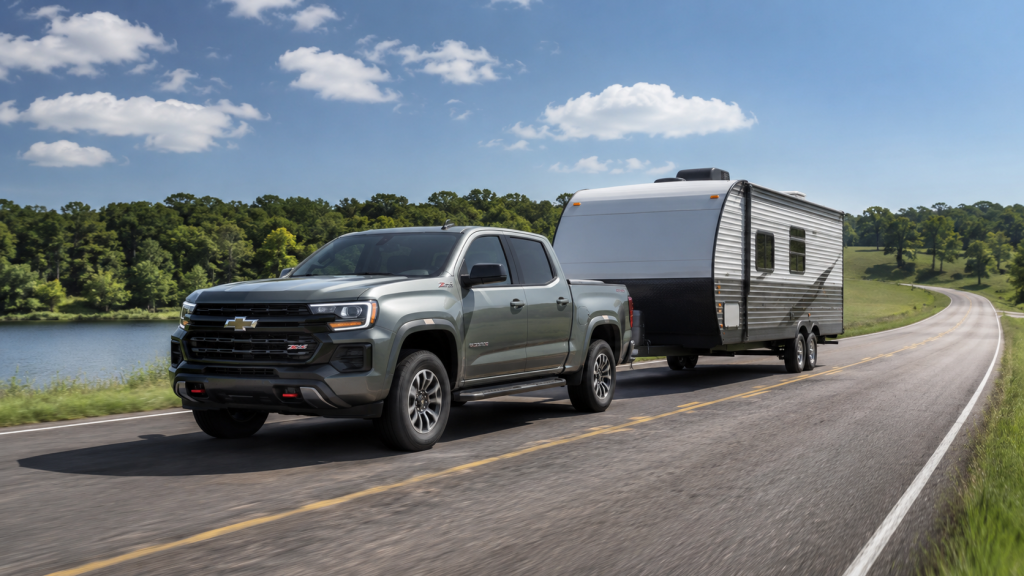
A camper, boat, or equipment trailer puts several demands on a truck at once. Chevy Colorado towing capacity starts with the rated trailer limit, but that number needs context. Payload, tongue weight, passengers, cargo, and truck configuration all enter the math. Therefore, a trailer below 7,700 pounds does not automatically fit every Colorado. The exact truck and loaded trailer must remain inside every published weight rating. This guide explains how those numbers connect before the hitch meets the trailer. What Chevy Colorado Towing Capacity Measures How much can a Chevy Colorado tow? The rating describes the heaviest trailer approved for a specific truck setup. Chevrolet lists a 7,700 pound maximum available towing rating for the 2026 Colorado. However, that figure represents a properly equipped truck, not every Colorado on the road. Chevrolet uses several weight ratings when establishing towing limits. Gross Combination Weight Rating covers the loaded truck and loaded trailer together. Gross Vehicle Weight Rating covers the truck, occupants, cargo, and trailer tongue weight. Rear Gross Axle Weight Rating limits the weight carried by the rear axle. Therefore, one published towing number cannot replace the other ratings. A loaded trailer must fit beneath the trailer rating and the combined rating. The truck must also remain beneath its vehicle and axle limits. Chevy Colorado towing capacity also changes with the exact truck setup. Chevrolet notes that passengers, cargo, equipment, and accessories reduce remaining trailer weight. For this reason, the label and Owner’s Manual for the specific truck deserve the final check. Payload and Tongue Weight Share the Same Space Additionally, payload answers a different question than trailer weight. It measures how much weight the truck itself can carry. Chevrolet lists up to 1,710 pounds of maximum available payload for the 2026 Colorado. Still, that number changes with equipment and configuration. Moreover, trailer tongue weight presses downward on the hitch. That downward force counts toward the weight carried by the truck. Chevrolet recommends 10 to 15 percent tongue weight for conventional trailers in its 2026 trailering guide. For this reason, consider a loaded conventional trailer weighing 6,000 pounds. A 10 percent tongue load equals 600 pounds at the hitch. A 15 percent tongue load equals 900 pounds. Therefore, the hitch load can consume a large share of available payload before people enter the cab. Before towing, account for each load carried by the truck: Passenger weight uses part of the available payload before trailer tongue weight enters the calculation. Bed cargo adds more weight to the truck and leaves less room beneath its vehicle rating. Accessories can add weight before camping gear, tools, coolers, or other cargo enters the bed. Chevy Colorado towing capacity makes more sense when payload enters the same calculation. Moreover, use loaded trailer weight instead of an empty trailer figure. Water, propane, tools, food, and gear can raise trailer weight before departure. Why Trailering Equipment Changes the Rating Why does trailering equipment matter when the engine remains the same? The truck needs the correct hardware to connect, control, and monitor a trailer. Chevrolet ties the Colorado’s 7,700 pound maximum rating to the proper factory equipment. Additionally, the Advanced Trailering Package adds hardware and technology for trailer operation on qualifying Colorado configurations. Chevrolet also offers Hitch View to show the receiver area during hookup. Therefore, these features address more than engine output. The towing setup should match the trailer and the truck rating: The receiver and hitch hardware must match the trailer weight and connection type. Trailer wiring connects required lighting and electrical functions between the truck and trailer. Trailer brake equipment coordinates braking support when the trailer requires its own brakes. Chevy Colorado towing capacity also depends on using equipment approved for the truck and trailer. In addition, Chevrolet advises owners to review the Owner’s Manual before trailering. The manual identifies requirements for the exact truck and trailer combination. Beyond that, hardware matters because towing places load on braking, cooling, suspension, tires, and chassis components. Consequently, engine torque only answers part of the towing question. The complete truck setup establishes the published limit. Why Colorado Trim and Configuration Matter Why can two Chevy Colorados carry different towing ratings? Their engines may match while chassis hardware, tires, suspension, and installed equipment differ. Those changes alter vehicle weight and the ratings assigned to each configuration. In addition, the 2026 Colorado uses a 2.7 liter TurboMax engine with 310 horsepower and 430 pound feet of torque. However, Chevrolet offers five distinct Colorado models with different hardware and missions. WT, LT, Trail Boss, Z71, and ZR2 do not share identical chassis setups. For a towing focused truck, compare the exact configuration before comparing trim names. Check the factory trailering equipment, payload label, axle ratings, tires, and trailer connection. Therefore, a trim with more specialized trail hardware may carry a different trailer rating. Chevy Colorado towing capacity should never come from the trim badge alone. Instead, use the rating assigned to the truck being considered. This matters when a camper or equipment trailer will travel with people and bed cargo. Moreover, off road hardware can also change the equation. Larger tires, suspension changes, added chassis equipment, and vehicle weight all enter the engineering limits. For this reason, compare the complete truck specification against the loaded trailer. When Silverado Enters the Towing Conversation Colorado gives Chevrolet truck shoppers a midsize option with up to 7,700 pounds of maximum available towing. However, some trailer plans call for more room within the published ratings. Silverado 1500 reaches up to 13,300 pounds of maximum available towing for 2026. Still, that larger rating does not mean every trailer requires a Silverado. Instead, start with the loaded trailer, tongue weight, passengers, and truck cargo. Then compare those numbers with the ratings for the exact Colorado. Chevy Colorado towing capacity may fit a boat, utility trailer, or travel trailer while leaving enough room within every rating. By contrast, heavier campers or larger equipment trailers may point toward Silverado 1500. Silverado HD enters the discussion when trailer demands move well beyond half ton truck ratings. Furthermore, towing frequency deserves attention during truck selection. A trailer used several weekends each year presents a different task from frequent heavy towing. Route grades, cargo changes, and trailer loading also deserve careful review before choosing the truck. Vince’s GM Center offers Colorado, Silverado 1500, and Silverado HD models for Chevrolet truck shoppers in Burlington. Still, the towing decision should begin with weight, not truck size alone. Bring the trailer specifications and expected cargo into that comparison. Then verify the exact truck rating before you tow.

Silverado 2500 vs 1500: When Heavy Duty Makes Sense

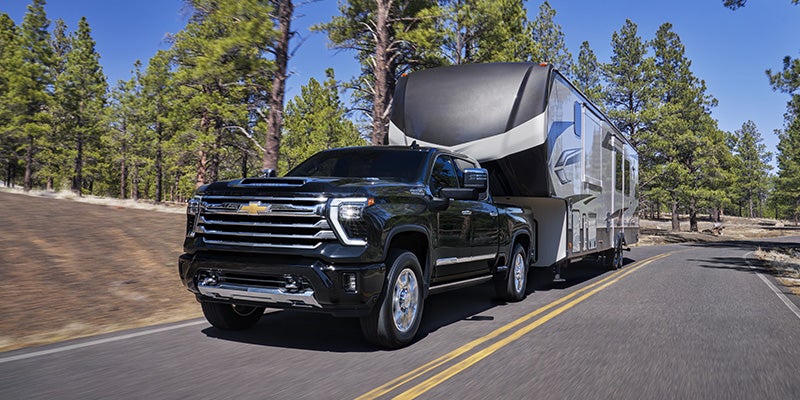
The Silverado 2500 vs 1500 question comes up the moment a truck shopper starts thinking seriously about towing or hauling. It carries real stakes either direction. Choose a truck with too little structural capacity and you push equipment past safe rated limits. Choose a platform with more capacity than your work ever demands and you absorb the fuel, ride, and cost trade-offs of a heavier truck you never fully load. The goal here is to lay out what separates these two trucks at a structural and mechanical level, what those differences mean for specific work scenarios, and how to reach a clear, grounded answer. What the HD Designation Means at the Structural Level HD stands for heavy duty, but that label covers a specific set of engineering choices that go well beyond a higher tow rating on the window sticker. The Silverado 2500 HD sits on a different foundation than the 1500, and those differences run through the frame construction, rear axle design, suspension geometry, and braking architecture. The 2500 HD uses a fully boxed high-strength steel ladder frame with heavier-gauge rails than the 1500 frame. Fully boxed construction closes all four sides of each frame rail, which increases resistance to torsional flex. When a loaded trailer applies rearward and downward force on the hitch receiver, the frame absorbs and distributes that force along its full length. A lighter frame deflects under that load. Deflection introduces stress fatigue into the metal and reduces how predictably the truck tracks a trailer through a turn or on a grade. The rear axle construction shifts between these two trucks as well. The Silverado 1500 uses an independent rear suspension on select configurations, which smooths out the ride on unloaded roads and reduces road noise at highway speeds. The 2500 HD runs a solid rear axle with leaf springs. That setup produces a firmer feel on empty roads but holds the axle in a fixed, stable position under vertical load. Leaf spring geometry stays consistent under heavy vertical weight in ways that coil and air setups cannot match across the full rated load range, which is why that configuration remains standard across HD-class work trucks. The braking architecture scales up to match. The 2500 HD ships with larger caliper and rotor packages and includes a factory-integrated trailer brake controller. Stopping a 20,000-pound combined vehicle and trailer load requires a far greater braking force than stopping an empty pickup. The 2500 HD's system is rated and calibrated for that demand range. The 1500 system is not. What Does Towing Capacity Really Mean for Your Decision? Towing capacity ratings are maximums, not operational targets. That distinction carries more weight in the buying decision than most shoppers realize before they commit. The Silverado 1500, when properly set up, reaches a maximum conventional tow rating of approximately 13,300 pounds. The 2500 HD with the Duramax 6.6L turbo-diesel reaches 22,500 pounds. Those numbers tell part of the story. What they leave out is operating headroom, and headroom is where the gap between these two platforms lives in real terms. A truck pulling near its rated maximum is working at the outer edge of its calibrated load range. The engine works harder to hold speed on grades. The transmission cycles more frequently under sustained load. The brakes absorb more heat per stop. The suspension runs compressed closer to its designed limit. None of those factors is unsafe in isolation, but the cumulative load on drivetrain cooling, brake components, and hitch hardware accelerates wear on trucks that run near their ceiling on a frequent basis. A Silverado 2500 HD pulling 13,000 pounds with the diesel is running at roughly 57 percent of its rated maximum. The engine, transmission, brakes, and suspension are well within their calibrated range. The truck holds speed on grades without strain, manages stopping distances with headroom left, and places far less thermal stress on the transmission cooler and rear brakes. If your trailer loads sit between 10,000 and 14,000 pounds with any frequency, that gap in operating margin is worth evaluating carefully, even if both trucks carry ratings that technically cover those numbers. Shoppers who pull fifth-wheel RVs, livestock trailers, or loaded flatbeds should pay close attention to tongue weight ratings alongside gross trailer weight. Tongue weight is the downward force a trailer's hitch point applies to the truck's receiver. The 2500 HD's receiver, frame, and rear suspension are rated for a far higher tongue weight ceiling than the 1500. Exceeding that ceiling creates trailer instability and accelerates wear on the hitch receiver. What a Heavy-Duty Truck Costs You Day to Day The Silverado 2500 HD is a fully usable daily truck, but it asks for trade-offs worth understanding before the purchase is made. The solid rear axle and leaf spring suspension that give the 2500 HD its stability under load produce a noticeably firmer ride on unloaded roads. With the bed empty and no trailer attached, the rear end has less compliance over expansion joints, rough pavement, and gravel. Drivers who spend most of their time on Colorado's rural county roads or eastern plains highways without cargo will feel that stiffness on a daily basis. It is not harsh, but it is distinct from the coil-suspended ride of the 1500. Fuel consumption is a real line item. The 2500 HD does not receive an EPA fuel economy rating because HD-class trucks fall under a separate federal testing standard, but owner data from mixed driving puts gas-engine 2500 HD models in the 12 to 15 mpg range. The 1500 with a comparable V8 returns 16 to 20 mpg in similar drive cycles. For buyers covering long miles through eastern Colorado and western Kansas, that spread adds up to a measurable annual fuel cost difference. Maneuverability deserves an honest look as well. The 2500 HD is longer, taller, and heavier than the 1500 in equivalent cab and bed configurations. In tight loading areas, elevator lots, or narrow farm access roads, that added footprint requires more deliberate awareness. If your daily route involves frequent maneuvering in confined spaces without a trailer, the 1500's smaller profile gives you a real operational edge. The Work Scenarios Where the 2500 HD Is the Right Tool There is no universal answer to the half-ton versus three-quarter ton question. Certain work scenarios point clearly toward the 2500 HD, and the reason is not that the 1500 falls short on paper. It is that the 2500 HD's structural architecture fits those scenarios in ways a lighter platform cannot replicate. Three categories cover the majority of buyers who need to step up to HD. Gooseneck and fifth-wheel towing: Both hitch types mount in the truck bed and transfer load directly to the frame and rear axle. That mounting geometry requires the structural rating of an HD chassis. The 2500 HD is the correct platform for that connection, and the 1500 is not rated for it. Consistent loads above 10,000 pounds: Loaded livestock trailers, heavy flatbeds carrying farm equipment, and large enclosed cargo haulers in that range belong on an HD chassis. The operating headroom gap covered in the previous section is the reason, not the maximum number on the sticker. High payload work in the bed: The 2500 HD carries between 3,375 and 3,689 pounds of payload in gas-engine configurations, roughly 60 percent more than a well-equipped 1500. Contractors loading concrete block, lumber, or equipment components need that rated capacity to stay within safe limits. Two additional scenarios make a strong case for the 2500 HD. Drivers who make sustained trailer hauls on highway grades put continuous demand on drivetrain cooling, and the 2500 HD's engine and transmission cooling architecture is calibrated for that sustained output in ways the 1500 is not. Buyers who need the Duramax 6.6L turbo-diesel for long-haul torque will find the 910 lb-ft and 470 horsepower it produces deliver a qualitatively different pulling character than any gas engine in either truck class. How to Evaluate Which Truck Fits Your Work The right starting point is your most demanding consistent use case. What comes up on a regular schedule sets your load baseline, and that baseline points you toward the right platform. If your heaviest consistent load is a recreational boat, a small travel trailer, or a utility trailer under 8,000 pounds, the Silverado 1500 handles that work with rated headroom to spare. Add the available 3.0L Duramax diesel and you get towing efficiency without the HD trade-offs on fuel consumption and ride firmness. The 1500 is also the stronger fit if you spend most hours driving unloaded or if a smoother daily ride is a priority. If your work includes hauls above 10,000 pounds on a frequent basis, fifth-wheel towing, or heavy payload loads in the bed, the Silverado 2500 HD is the correct starting point. The added purchase cost, with the 2026 model starting at $48,195, reflects the investment in frame construction, braking capacity, and drivetrain cooling architecture that protect both the truck and whatever it pulls. Buyers caught between these two platforms are most frequently those with occasional heavy needs. If you pull heavy equipment four times a year but otherwise drive empty, a properly equipped 1500 may cover those hauls adequately. However, if those hauls run above 12,000 pounds, the margin narrows. In those situations, the 2500 HD provides a structural buffer the 1500 cannot. At Vince's GM Center in Burlington, Colorado, the team works with truck buyers across eastern Colorado and western Kansas who face exactly this decision every season. Whether your needs point toward the versatile 1500 or the work-rated 2500 HD, the right conversation starts with what you haul, and the team here is ready to work through that with you

2026 Chevrolet Colorado: Is It Enough Truck for You?

The 2026 Chevrolet Colorado may fit your routine when its towing, cab, and bed limits cover your hardest planned task. Start with the work you expect the truck to handle most. Then compare those needs with the truck’s ratings, space, and trim choices. A midsize pickup can cover commuting, home projects, weekend towing, and light jobsite work. It also takes up less space than a Silverado 1500. However, its shorter bed and smaller rear seat may create limits for some households. The goal is simple. Choose enough truck for your plans without adding size you must manage every day. Start With Your Hardest Truck Task Your hardest planned task should guide the truck decision. That task may involve towing, bed cargo, passengers, or rough roads. What should you list first? Record the heaviest trailer, largest bed load, and usual passenger count. Also note how many times each task happens during a normal year. Use these questions before comparing trims: What is the loaded weight of your camper, boat, utility trailer, or work trailer? How much weight will ride in the bed, including tools, supplies, coolers, and accessories? How many adults, children, or child seats will travel inside the cab? A rare task may not require a larger truck. However, repeated heavy loads deserve more room below the truck’s limits. The Colorado suits people who need pickup utility without a full size footprint. It works well when towing and cargo stay within clear margins. A Silverado 1500 may fit better when those tasks occur every week. Is 7,700 Pounds Enough for Your Trailer? The 7,700 pound maximum tow rating applies to correctly equipped Colorado trucks. The selected configuration must support that figure. Is 7,700 pounds enough for your trailer? Start with the loaded trailer weight, not the empty factory number. Water, propane, batteries, food, tools, and gear can raise the total. Hitch weight also presses down on the truck. Passengers, bed cargo, and accessories use part of the truck’s load allowance too. Therefore, review four items before choosing: Confirm the trailer’s loaded weight after fluids, supplies, and gear are added. Estimate hitch weight and every item carried inside the truck. Check the door label and towing information for the exact Colorado. A trailer may fall below 7,700 pounds while the truck carries a heavy cab and bed load. That combination can leave little room below another rating. Smaller campers, fishing boats, utility trailers, and recreation gear may fit the Colorado well. Larger trailers deserve a closer comparison with the Silverado 1500. Test the Crew Cab and Short Bed Every 2026 Colorado uses a crew cab with four full doors. The layout gives rear passengers direct entry. Will the second row fit your household? The answer should come from a physical test, not a measurement alone. Adults may fit well for local trips. Taller passengers may want more legroom during longer drives. Rear facing child seats can also reduce front seat space. Bring your child seat during a dealership visit. Install it behind each front seat. Then check entry room, buckle access, and front passenger comfort. The short bed handles groceries, tools, camping gear, and home project supplies. Longer lumber, ladders, or large equipment may need added support. A toolbox or bed cover also changes open cargo space. Those parts add weight and may limit how larger items fit. The Colorado works best when its cab and bed match the items you carry most. Regular adult passengers or long materials may point toward a Silverado. Compare Daily Size With a Silverado 1500 The Colorado is shorter than a Silverado 1500. That smaller footprint can simplify parking, garage entry, and tight turns. How much does truck size matter each day? It matters during every parking attempt, fuel stop, school pickup, and garage entry. Measure your garage before choosing. Include the door opening, interior length, shelves, workbenches, and walking room around the truck. A pickup may fit between the walls but still leave little room for loading. Mirror clearance also matters near a narrow garage door. The Colorado may suit crowded parking lots, older streets, and tighter rural driveways. The Silverado offers more cab and bed choices. That added room may serve larger crews, longer materials, or heavier weekly loads. However, the larger body requires more turning and parking space. Choose the Colorado when the shorter body solves a daily concern. Choose the Silverado when added room solves a repeated need. Choose the Right 2026 Colorado Trim The Colorado lineup offers trims for paved travel, jobsite use, rough roads, and harder trails. Each grade changes tires, suspension parts, ride height, and equipment. Which trim fits your routes? Begin with where the truck spends most of its miles. WT and LT suit commuting, job tasks, errands, and light towing. Trail Boss adds a lifted stance and equipment for rough roads. Z71 blends trail hardware with features suited to paved travel. ZR2 adds specialized parts for demanding trail routes. Before choosing, ask these questions: Will the truck spend most miles on pavement? Do work routes include gravel, fields, mud, or uneven property roads? Will the added trail hardware receive regular use? Extra trail parts can raise tire cost, road noise, step in height, and purchase price. Appearance should not make the entire decision. During the test drive, check ride feel, tire noise, visibility, camera views, and bed access. Those details shape every trip. When Does a Silverado 1500 Fit Better? A Silverado 1500 fits better when the Colorado leaves little room below your planned loads. It may also suit larger crews or longer cargo. When should you move into a full size pickup? Focus on repeated tasks, not rare possibilities. Choose the Silverado when heavy towing occurs throughout the year. Also consider it when adults use the rear seat during most trips. A larger truck may serve crews carrying big tools, building supplies, or heavy equipment each week. Longer bed choices can also matter. However, added size should solve a clear need. Parking, garage room, turning space, and purchase price still deserve review. The Colorado remains a strong choice when towing, cargo, and passenger needs stay moderate. Its shorter body can make daily travel easier. Choose the truck that covers your hardest planned task with room to spare. Then make sure its size still fits your daily routine.