


Spring in Colorado can be hard on a vehicle in ways many drivers do not immediately notice. Winter may be over, but the effects of cold temperatures, road grime, potholes, and changing tire pressure often show up after the season ends. That is why a Chevrolet spring maintenance checklist or GMC spring maintenance checklist should do more than repeat basic service reminders. It should help drivers understand which systems were stressed during winter and why those systems matter for daily driving, safety, and long term wear. For Colorado drivers, spring service is not just about routine upkeep. It is about catching small issues before they affect tire life, visibility, braking confidence, or summer travel reliability. That practical, ownership focused approach fits the clear and benefit led tone expected for Chevrolet and GMC service content.
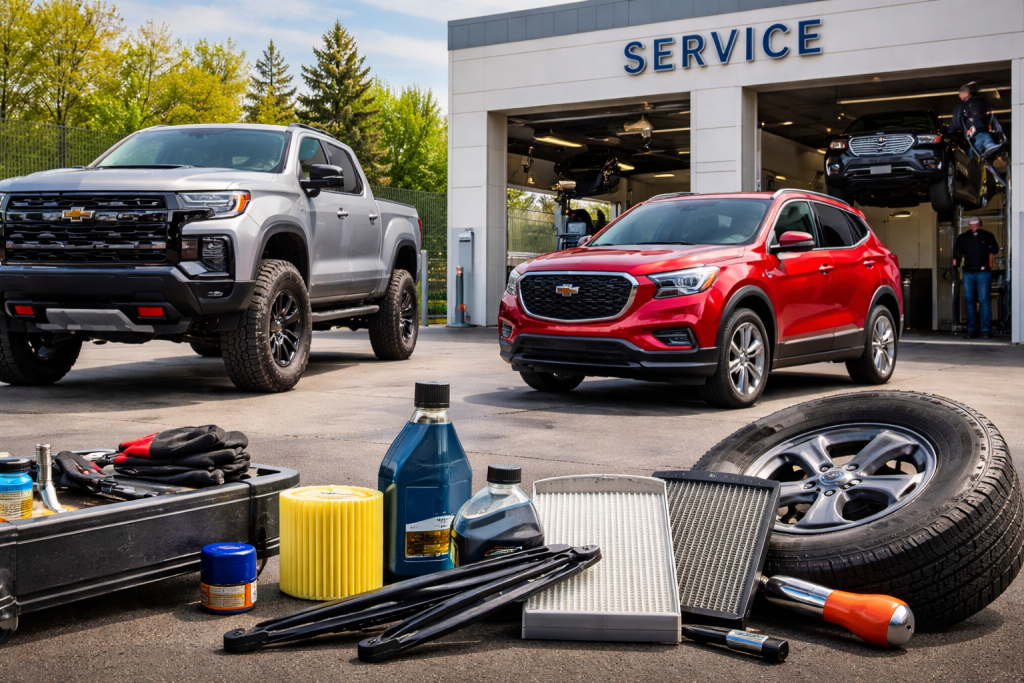
Why Colorado Spring Driving Changes What Chevrolet and GMC Owners Should Check First
Many Chevrolet and GMC owners ask what a spring vehicle maintenance checklist should actually include after a Colorado winter. The answer starts with understanding what winter conditions do to the vehicle.
Freeze thaw cycles can create potholes that put sudden impact loads into tires, wheels, and suspension components. Road debris and grime build up underneath the vehicle and around key wear items. Temperature swings can also affect tire pressure and battery performance. A vehicle may still feel normal in everyday driving even when alignment angles, tread wear, or filter condition have started to change.
That is why a useful Chevrolet spring maintenance checklist or GMC spring maintenance checklist should prioritize the systems most likely to be affected by winter road conditions:
• Tires and wheel condition
• Suspension and alignment behavior
• Oil and fluid condition
• Engine and cabin air filters
• Wiper blades and brake performance
• Multi point inspection results
This kind of checklist is more effective than a generic service list because it reflects how Colorado roads and weather influence real ownership.
How Chevrolet and GMC Tire Service Helps Catch Winter Road Damage
Drivers also want to know why Chevrolet tire rotation service or GMC tire inspection matters so much in spring. The reason is that tires are often the first place winter wear becomes visible.
Tire rotation is the process of moving tires from one wheel position to another so tread wear stays more even across the vehicle. Chevrolet recommends regular tire rotation because front and rear tires often wear differently depending on steering load, braking force, and drivetrain layout. When wear becomes uneven, it can affect how the vehicle tracks on the road, how evenly it brakes, and how long the tires last.
Spring is also a good time to check for pothole related problems. A hard impact can damage more than the tire itself. It can also affect:
• Wheel condition and balance
• Alignment angles
• Steering response
• Suspension components
• Tread wear patterns
For Colorado drivers, this means a Chevrolet tire rotation service or GMC tire inspection is not just about mileage intervals. It is also a way to catch winter damage before it turns into vibration, uneven wear, or reduced wet weather grip.
Why Oil, Filters, and Fluids Matter in a Chevrolet and GMC Spring Maintenance Checklist
Another common question is whether Chevrolet oil and filter change service or GMC engine air filter service really needs attention if the vehicle still seems to be running fine. In many cases, yes.
Oil protects internal engine components by reducing friction, carrying heat away from moving parts, and helping suspend contaminants until the oil is changed. If oil has broken down or reached its service interval, the engine may still operate normally for a while, but long term protection is reduced.
Spring is also an ideal time to check filters. A dirty GMC engine air filter service item can restrict airflow into the engine, which affects combustion consistency and can reduce performance efficiency. A clogged GMC cabin air filter replacement or Chevrolet cabin filter service item can reduce airflow through the HVAC system, which matters once warmer weather arrives and drivers rely more heavily on ventilation and air conditioning.
Fluid checks are important for the same reason. Brake fluid, coolant, and washer fluid all support systems that become especially important as spring weather and travel demands increase.
How Wiper Blades and Brake Checks Support Safer Spring Driving
Owners often ask whether Chevrolet wiper blade replacement or GMC brake inspection is truly necessary if there are no obvious warning signs. The issue is that both systems can decline gradually.
Wiper blades are a good example. After a winter of cold exposure and road grime, the rubber edge on a blade may harden, crack, or lose even contact with the windshield. In light rain or road spray, that can lead to streaking and reduced visibility. Drivers often do not notice the problem until the first strong spring storm.
Brake inspections matter for a similar reason. Braking performance is not only about whether the vehicle stops. It is also about how smoothly and consistently it responds under normal driving. If pads are worn unevenly or braking surfaces show excess wear, stopping confidence can change slowly enough that drivers adapt to it without realizing the system needs service.
For spring driving, these items are worth checking because they directly affect visibility and control.
Why a Chevrolet and GMC Multi Point Inspection Is One of the Smartest Spring Service Steps
Another common question is whether a GMC multi point inspection or Chevrolet multi point inspection is just a basic review or a useful way to catch winter related wear. A multi point inspection is a structured service check in which technicians review major vehicle systems such as tires, brakes, fluids, and visible wear items to identify developing maintenance needs.
That matters because not every issue creates an immediate dashboard warning or obvious symptom. A spring inspection can help flag:
• Battery weakness after cold weather strain
• Uneven tire wear or impact damage
• Brake wear that has not yet become severe
• Fluid conditions that need attention
• Wiper or filter wear that affects comfort and visibility
For Colorado drivers, a Chevrolet and GMC certified service visit that includes a multi point inspection can be one of the most efficient ways to reset the vehicle after winter and prepare it for warmer weather travel.
Why a Spring Checklist Matters for Chevrolet and GMC Owners
A strong Chevrolet spring maintenance checklist or GMC spring maintenance checklist should do more than remind drivers to get an oil change. It should help owners understand how winter conditions affect tires, filters, visibility, braking, and inspection needs. That is especially important in Colorado, where potholes, temperature swings, and changing road conditions can create wear that is easy to overlook.
For drivers preparing for spring commuting and summer travel, the smartest service priorities usually include tire inspection and rotation, oil and filter service, air filter checks, wiper blade review, brake inspection, and a multi point inspection. When those items are handled together, Chevrolet and GMC owners are in a stronger position to protect vehicle performance, comfort, and reliability through the next season.
Connect with us

