




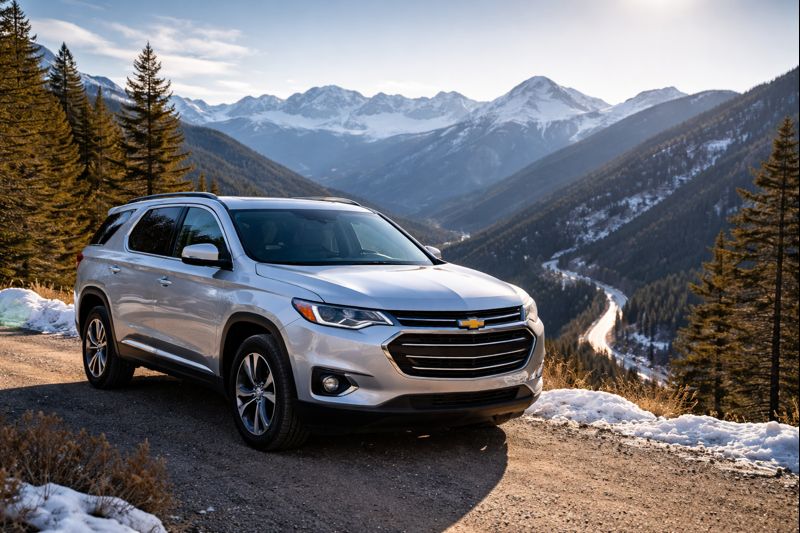
Colorado driving presents challenges that go beyond daily commuting. Elevation changes, unpredictable weather, limited cell coverage in mountain corridors, and long stretches of rural roadway all place higher demands on vehicle safety and connectivity systems. GM OnStar is designed to operate at the vehicle level rather than relying solely on a driver’s smartphone, which changes how it performs in real world Colorado conditions.
Understanding whether OnStar makes sense starts with understanding what it actually does, how it interacts with the vehicle, and where its capabilities extend beyond traditional roadside assistance or phone based apps.
OnStar as an Embedded Vehicle System
OnStar is built directly into GM vehicles as an embedded telematics platform. It does not rely on the driver’s phone hardware to function.
Core system components include:
- A dedicated onboard cellular modem
- External vehicle mounted antennas optimized for signal strength
- Direct access to vehicle sensors and control modules
- A continuous connection to GM response infrastructure
Because of this design, OnStar operates independently of phone battery life, Bluetooth pairing, or app permissions. The system remains active whenever the vehicle has power and cellular coverage.
Automatic Emergency Response in Remote Areas
One of the most critical OnStar capabilities for Colorado drivers is automatic emergency response.
If a severe collision occurs:
- Airbag deployment triggers an automatic alert
- Vehicle location data is transmitted immediately
- An OnStar advisor attempts two way communication
- Emergency services can be contacted even if the driver cannot respond
In mountainous or rural areas where:
- Cell service may be inconsistent
- Accidents can occur off main highways
- Response times depend on precise location data
This vehicle based detection can reduce delays that often occur when emergency response relies on bystanders or phone based reporting.
Connectivity Beyond Smartphone Coverage
OnStar uses a built in cellular connection rather than mirroring a phone’s signal. This matters in Colorado where terrain can interrupt personal device connectivity.
Advantages of embedded connectivity include:
- Improved signal stability due to roof mounted antennas
- Continued service when phones lose signal in valleys or canyons
- Redundant communication pathways during emergencies
- Vehicle level GPS accuracy independent of phone placement
While OnStar cannot overcome complete lack of cellular coverage, its signal consistency is often stronger than handheld devices in marginal service areas.
Vehicle Diagnostics and Proactive Alerts
Another area where OnStar differs from phone based services is direct access to vehicle health data.
OnStar can monitor:
- Engine and drivetrain alerts
- Battery and electrical system status
- Tire pressure changes
- Maintenance related fault codes
Rather than reacting only after a breakdown, the system can alert drivers to developing issues that could lead to roadside problems. For Colorado drivers who travel long distances between service locations, early awareness can prevent more serious interruptions.
Stolen Vehicle Assistance and Location Tracking
OnStar’s integration with the vehicle allows it to assist in theft recovery in ways apps cannot replicate.
Capabilities include:
- Real time vehicle location tracking
- Assistance coordinating with law enforcement
- Remote vehicle slowdown when authorized
- Recovery support even if the vehicle is powered off
In areas where vehicles may be parked at trailheads, ski areas, or remote locations, this level of tracking can add an extra layer of security.
How OnStar Compares to Roadside Assistance Alone
Traditional roadside assistance focuses on after the fact support such as towing or jump starts. OnStar expands beyond that scope.
Key differences include:
- Automatic crash detection instead of manual calls
- Vehicle diagnostics instead of symptom reporting
- Location transmission without driver interaction
- Integration with emergency services rather than third party dispatch
For drivers who prioritize emergency readiness over convenience features, this distinction is important.
Subscription Considerations in 2026
OnStar services are offered in tiered plans that separate safety features from convenience and connectivity options.
Factors Colorado drivers should consider:
- Frequency of mountain or rural driving
- Winter weather exposure and road conditions
- Distance from emergency services
- Desire for vehicle level diagnostics
- Comfort relying solely on smartphone based tools
Some safety features remain available during trial periods or limited access windows, while expanded services require a paid subscription. Evaluating which features align with actual driving habits helps determine long term value.
Limitations to Be Aware Of
OnStar is not a universal solution.
Limitations include:
- Dependence on cellular coverage
- Subscription cost over time
- Reduced benefit for drivers who remain in urban areas
- Overlap with smartphone features for some users
Understanding these tradeoffs prevents unrealistic expectations and supports informed ownership decisions.
Ownership Perspective for Colorado Drivers
For Colorado drivers who routinely travel through elevation changes, remote areas, or extreme weather, OnStar offers value through embedded safety systems rather than convenience alone. Its strength lies in automatic response, vehicle level connectivity, and integration with emergency services. Drivers who remain primarily in metro areas with strong phone coverage may see less differentiation, while those navigating the state’s more demanding driving environments may benefit from the added redundancy.
Connect with us

